
Agentic Analytics now has a playbook
2 years of discussions with data teams, 6 months of research on agentic analytics, 7 real companies examples - all in one free playbook.

Over the last 2 years, I’ve been talking to more than 300 data teams all over the world, all sizes. Since we created nao open source framework, I’ve also been doing a lot of research on analytics agents and what makes them work. And we even started the agentic analytics meetups in Paris, NYC and Berlin. This past few weeks, I spent some time putting all my learnings in a Playbook.
Today, I’m sharing with you my Agentic Analytics Playbook.
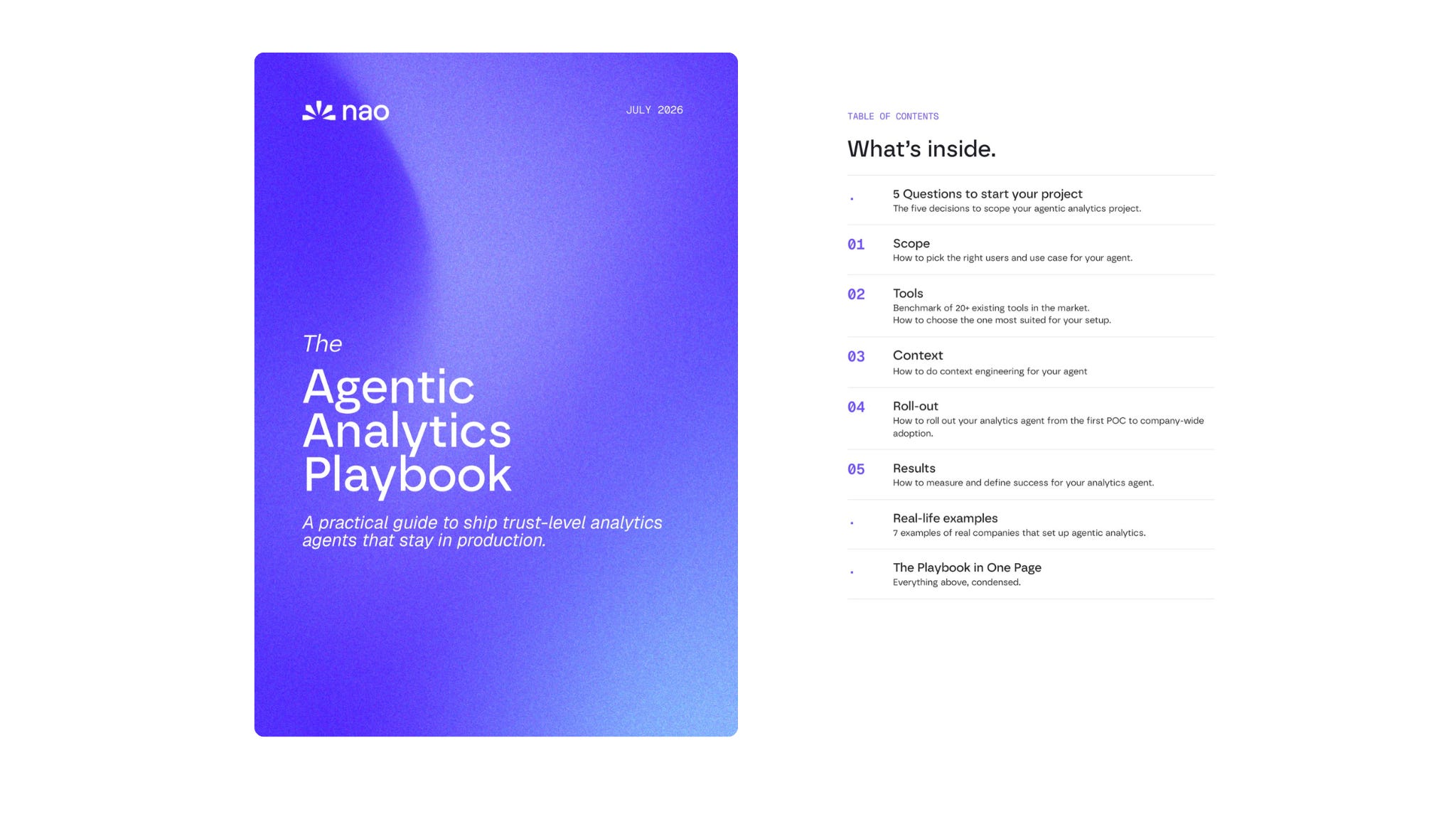
It’s a full guide to help you define your agentic analytics roadmap, choose the right tooling, develop context engineering skills, and get inspired by real life examples.
Who this is for
I wrote this playbook for data teams who want to implement agentic analytics this year - or maybe already have started. I want to help you compare different options and methods to do it.
Whether you’re a head of data, analytics engineer, or data analyst - this guide is for you.
What you can find in it
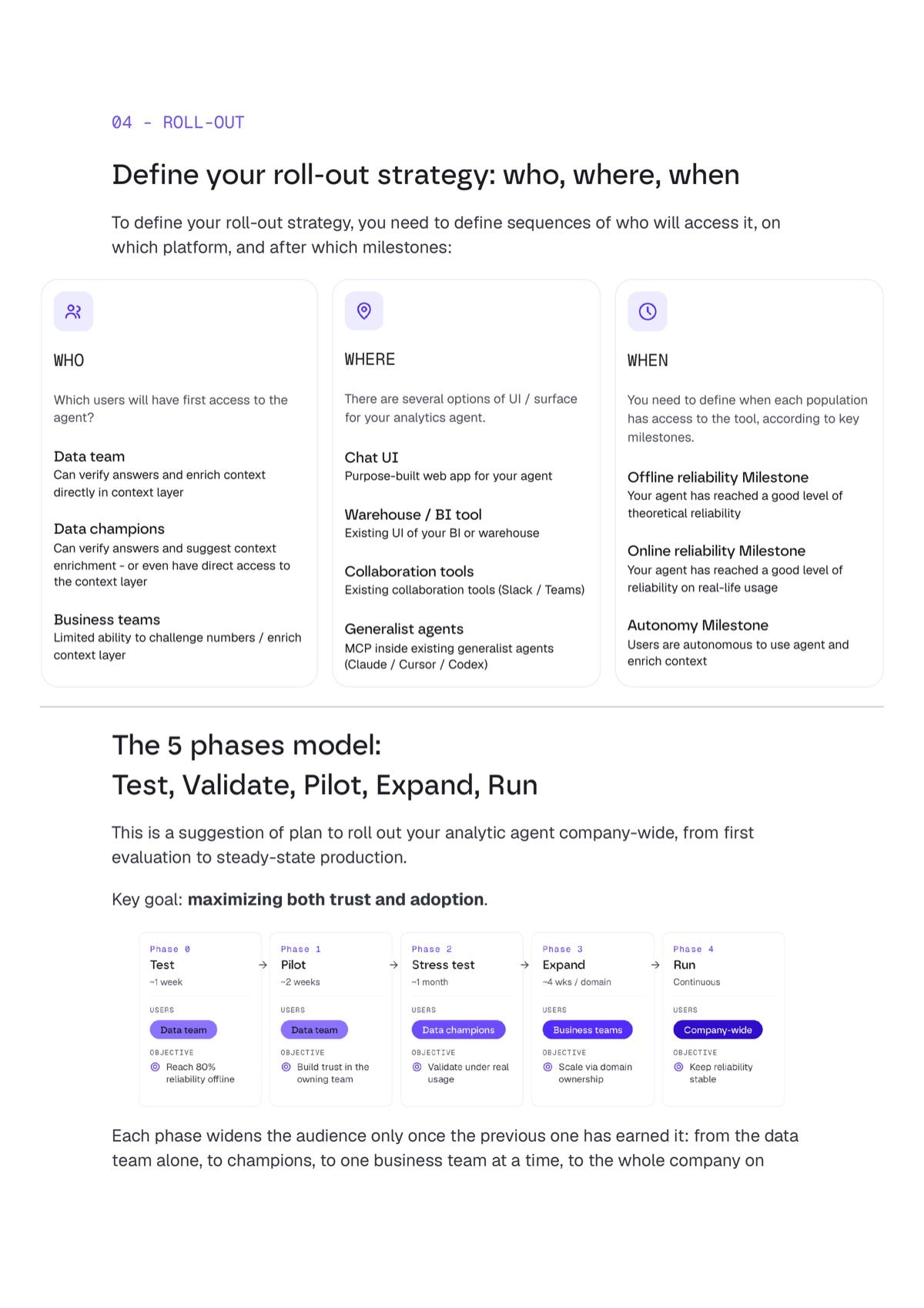
A step-by-step roadmap from agentic analytics POC to production
After talking to hundreds data teams, and implementing nao at 100+ teams, I started having a feeling of the order in which you should deploy your agent: who you should give your agent access to, what is the width of scope it should have, where it should live, which milestones you need to reach.
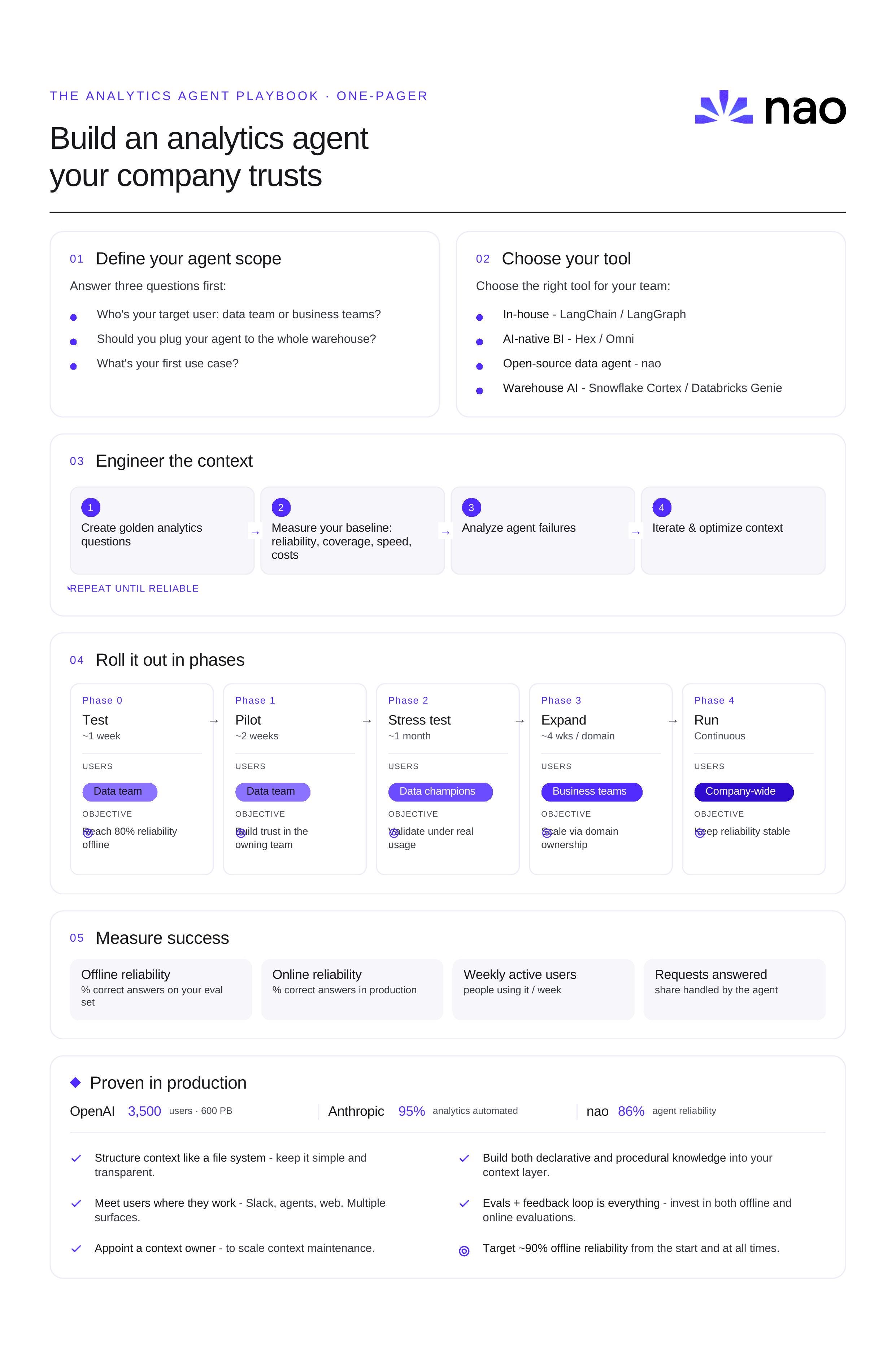
So from this I created a structured roadmap: 5 phases, from scoping your first use case to rolling out company-wide. Each phase has exit criteria so you know when you’re actually ready to move forward.
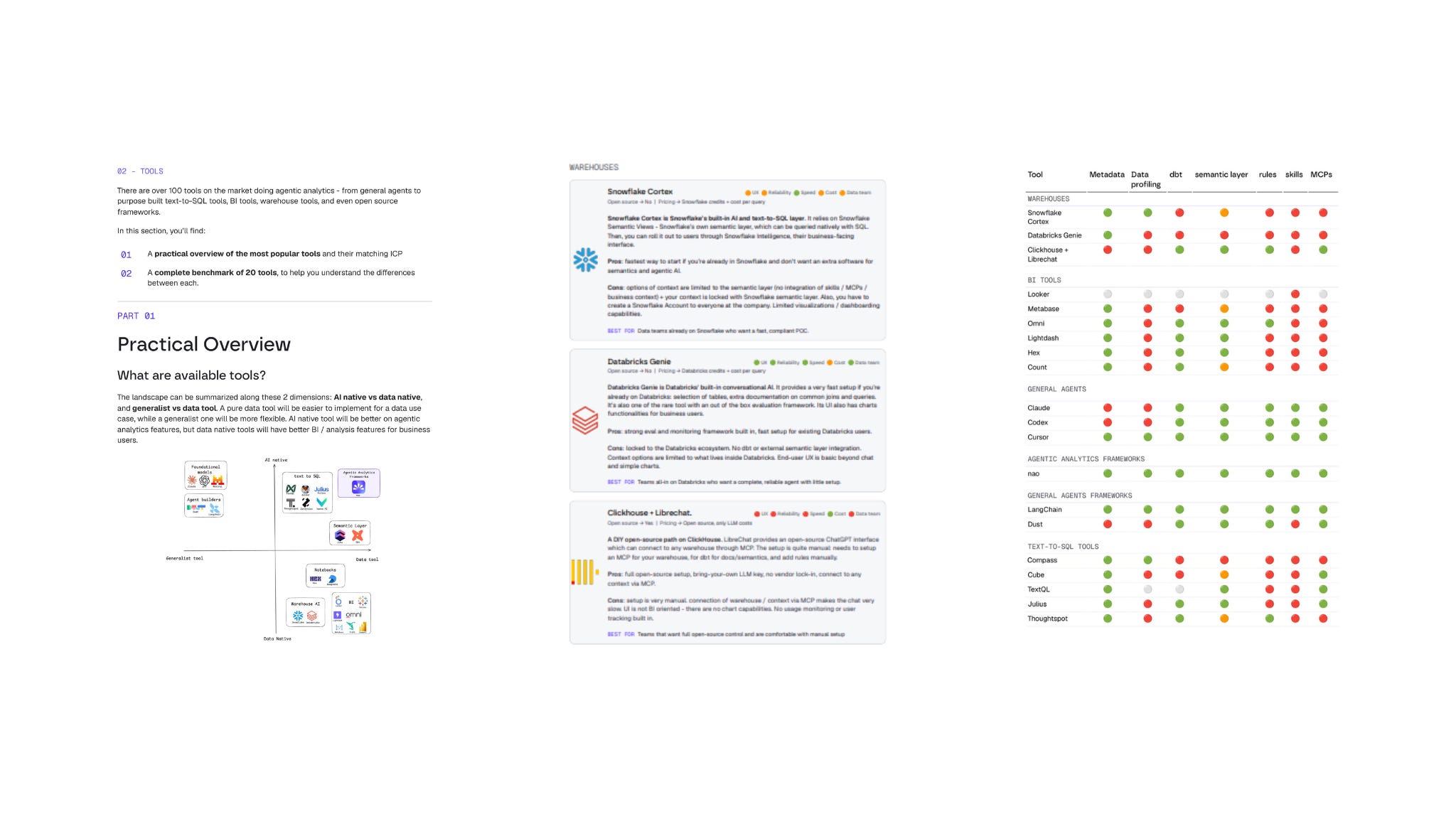
A benchmark of 20+ agentic analytics tools
Start of the year, I started doing a lot of agentic analytics tools benchmarks and kept enriching it. I went through every tool I could find - Snowflake Cortex Analyst, Databricks Genie, LangChain, CrewAI, nao, and 15+ others. I talked to teams using them, read their docs and context options, and compared them on what actually matters: reliability, cost, speed, and how much control the data team keeps.
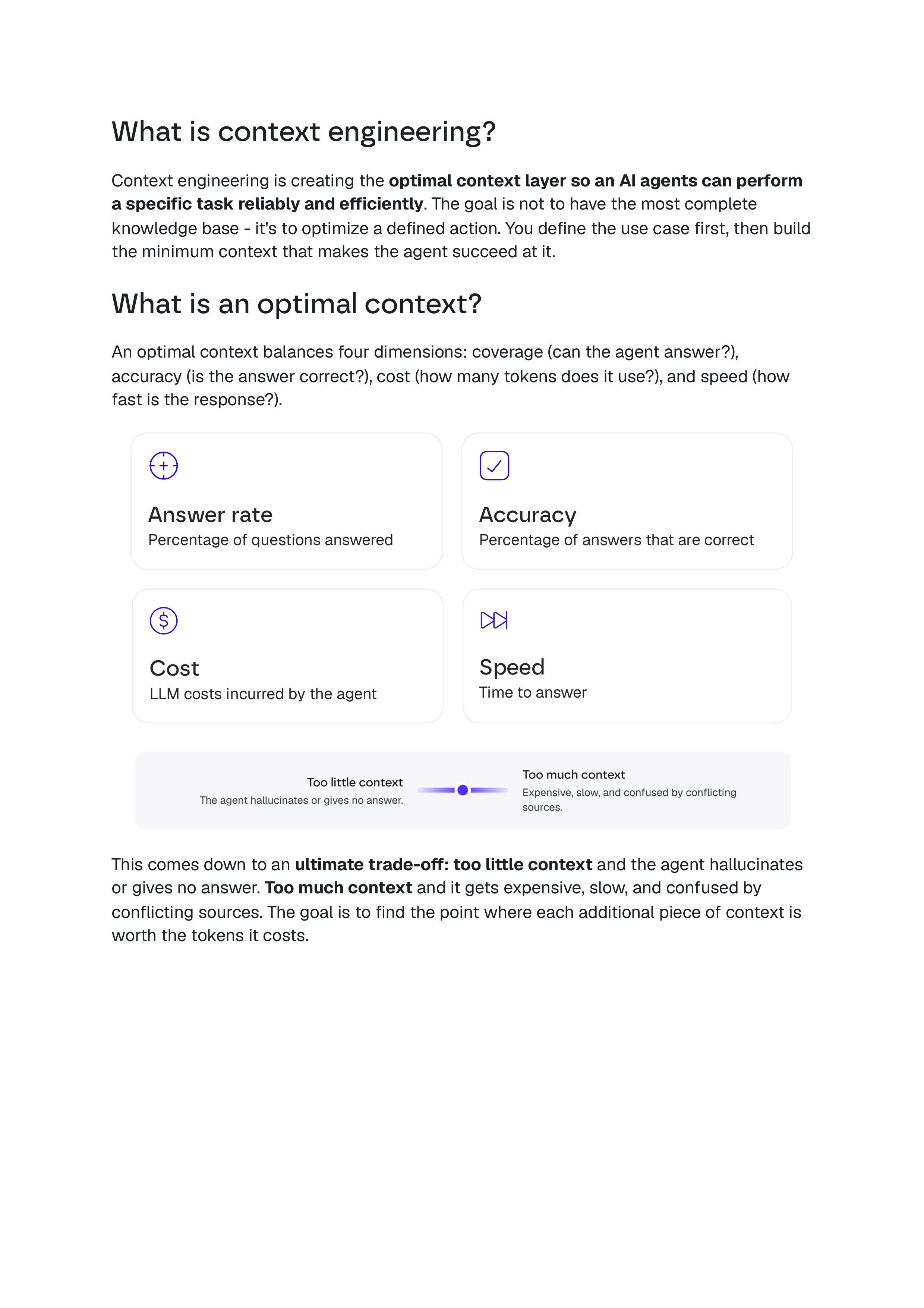
My context engineering method
This is the part I most loved doing in the last months: researching on context engineering. When we started nao, I had no idea what I would find out and was genuinely curious to understand how context impacted analytics agents.
I formalized my context engineering process into a 5-step method: creating your baseline, building evaluation sets, evaluating your agent, debugging it and iterating until the agent is reliable. And I think that only the data teams who adopt this level of methodicity get to production.
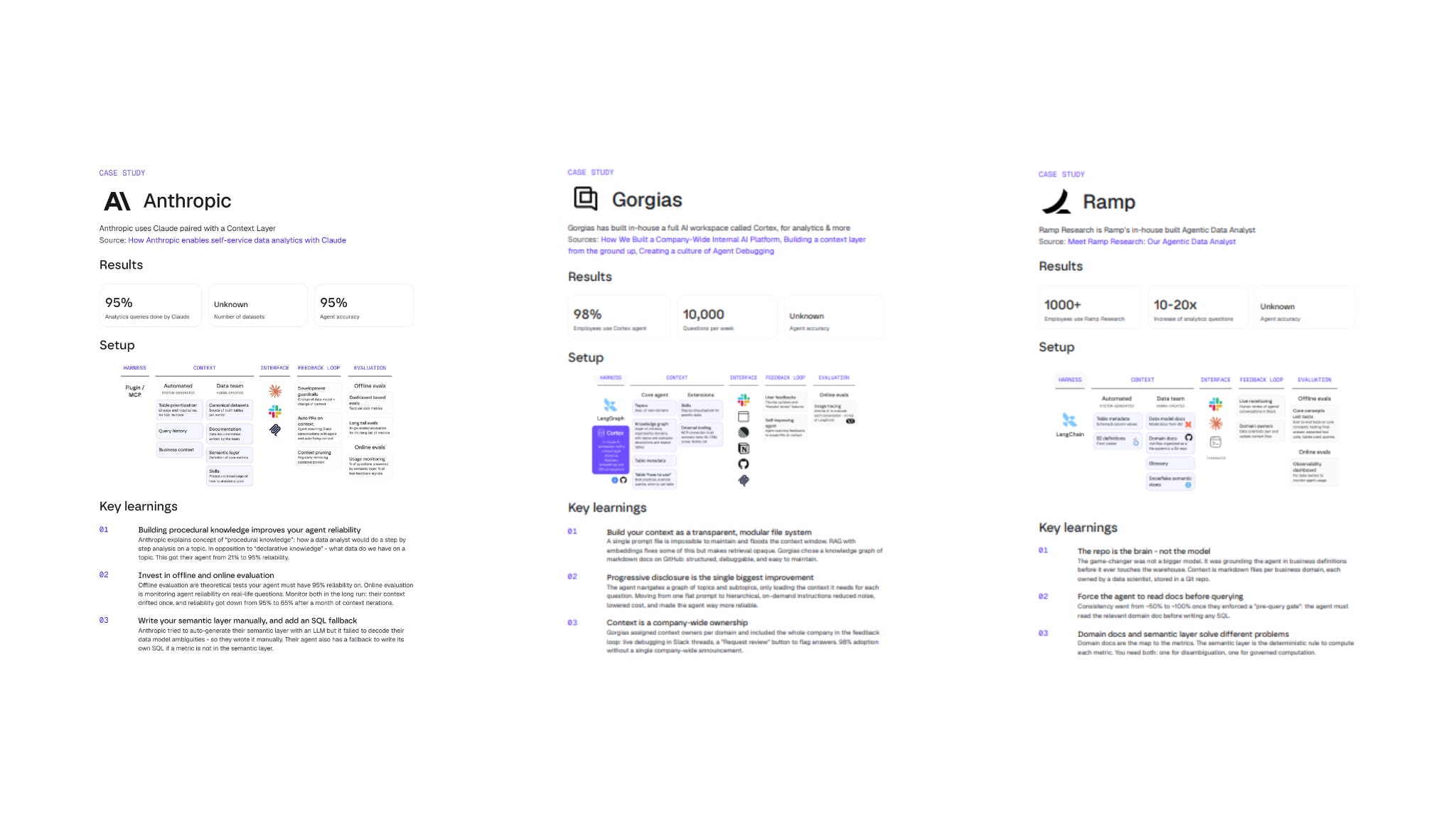
7 real company case studies
In the last months, more and more companies have opened up about their internal analytics agent setup - and I learnt a ton from it. Some of these came from articles I read, others from great encounters I made - Gorgias team first in our Paris Agentic Analytics Meetup, then Ramp & Vercel in our NYC meetup.
I thought it would be interesting to sum up all the different real life setups and gather all their learnings. For each company, I documented their setup, pulled their key metrics, and kept 3 key learnings.
Sneak Peak - the Playbook in one page
Get the Agentic Analytics Playbook
The playbook is free to download from here:
Feel free to send me some feedbacks - I’ll keep enriching it!
Also, if you want to say thank you, just leave a star on our Github repo 🫶🏻
See you soon for more agentic analytics news!
Not sure if I miss this; what is agentic analytics? or it is basically system evals?
Loved the content.